MAISONDURMONT
The Chandelier Guide
How to choose, size and hang the one light your room is built around. Real rules, a calculator, and a few minutes of your time.
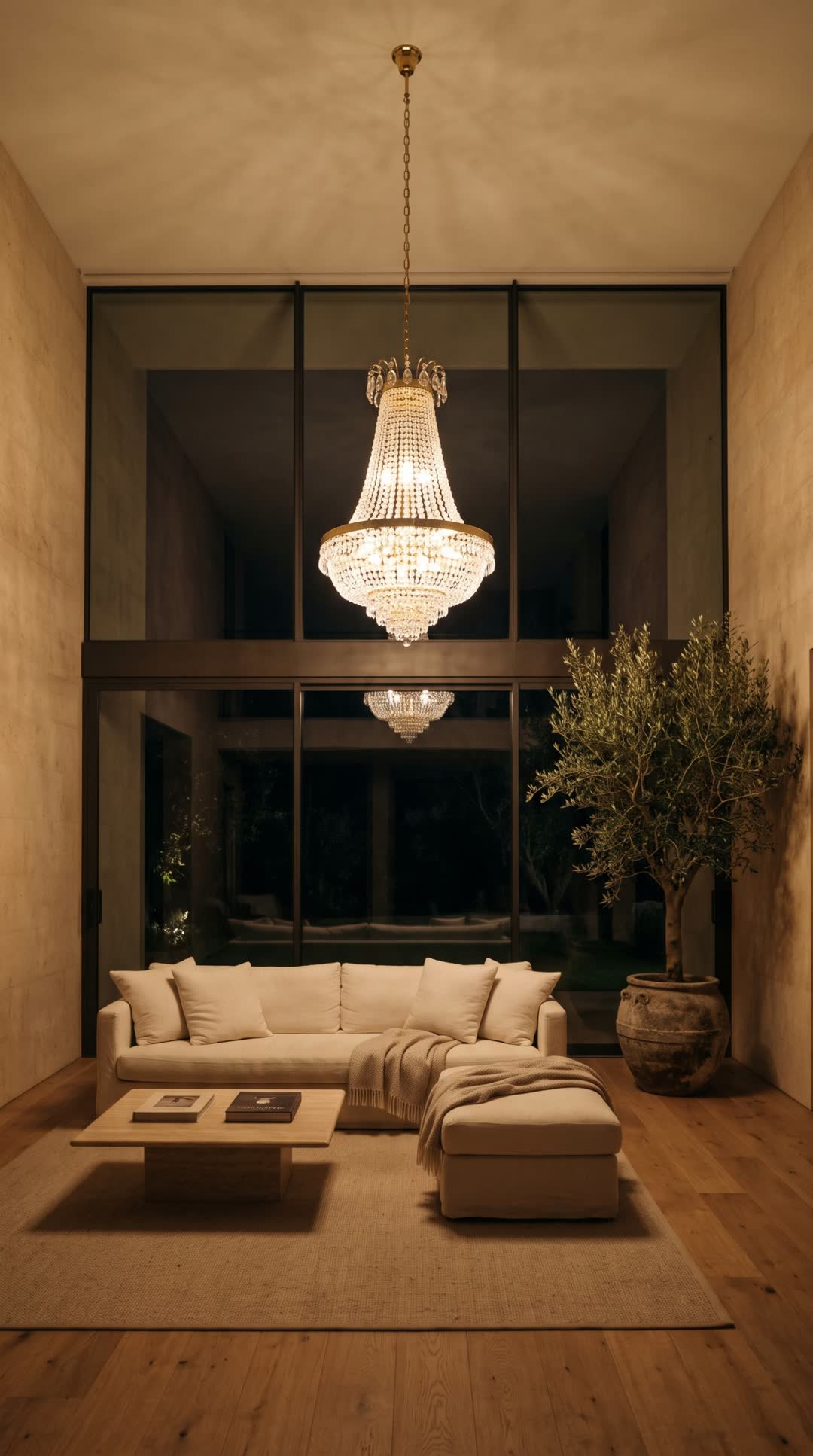
Each one changes a room differently. Swipe through, tap the small pictures to see each style in other rooms, then answer three questions to find yours.
Enter your room. The guide applies the standard rules lighting designers use as a starting point.
Fixture height includes the ceiling plate and chain or rod. Check the product's minimum overall height.
Only the bulb changed. Drag across the picture.
Cool white (5000K and above) is made for offices and garages. At home it flattens stone, wood and linen and makes evenings feel clinical.
For living rooms, dining rooms and bedrooms, choose warm white, 2700K to 3000K. The number is printed on every bulb box.
Look for CRI 90 or higher too. It means colours look true: skin, wood, fabric.
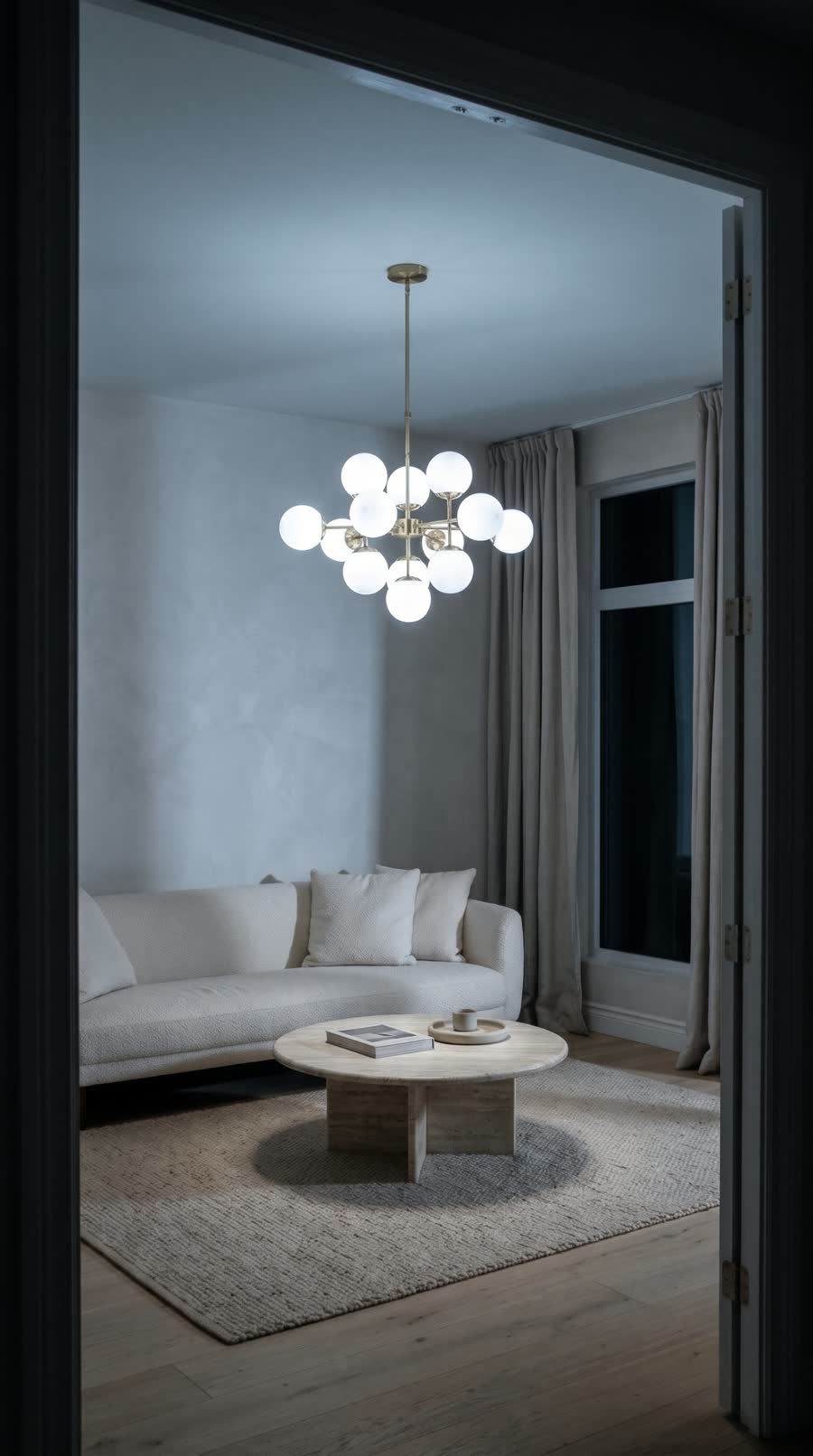
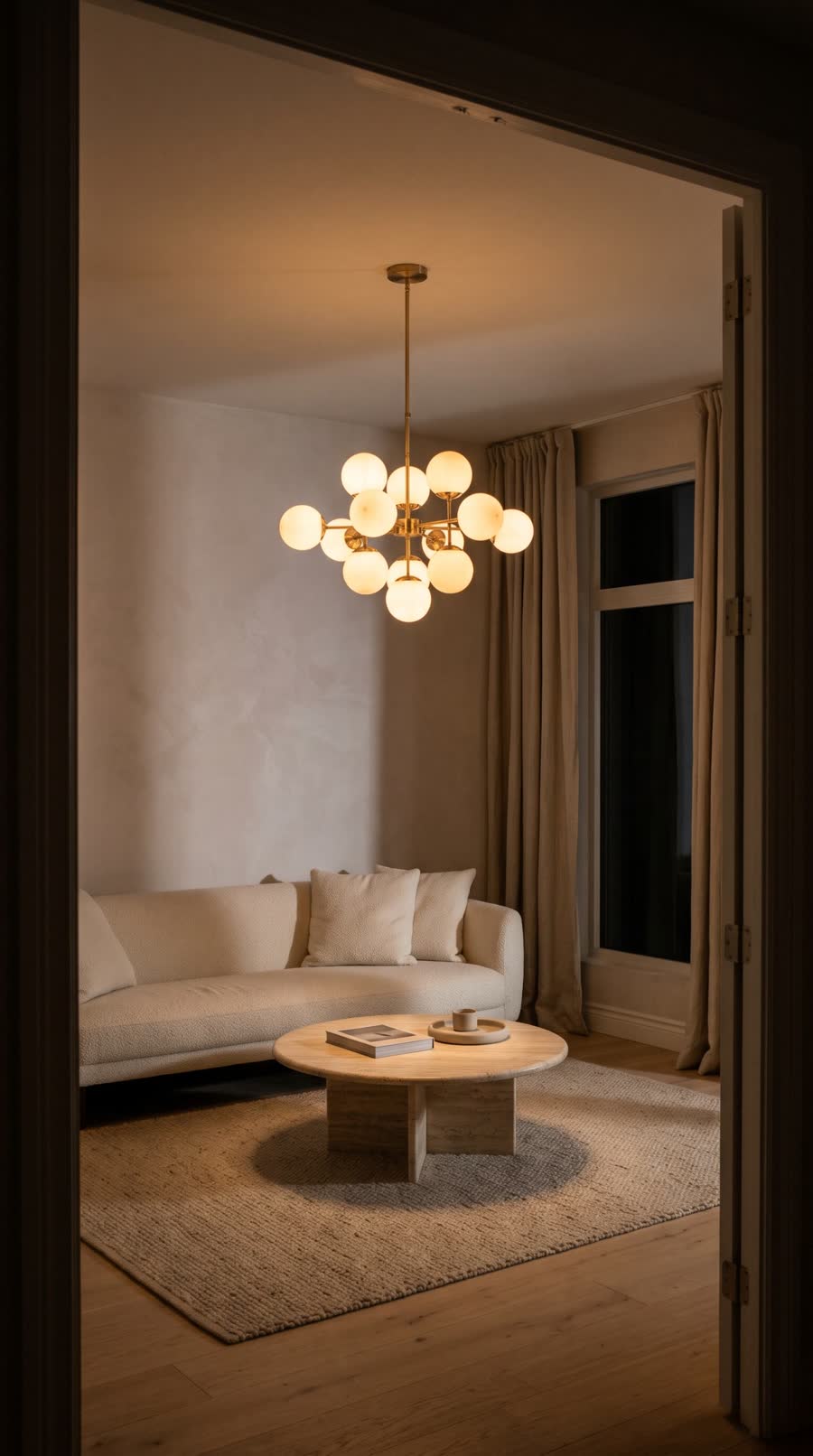 5000K2700K
Save this section. Every figure is a common industry rule of thumb, a starting point rather than law.
Add the room's length and width in feet. The sum, in inches, is the chandelier's diameter. In metric: (length + width in metres) × 8.3 cm.
Over a table, the chandelier should be half to two-thirds of the table's width, or about 30 cm narrower than it.
From tabletop to the bottom of the chandelier (30–36 in), with a 2.4 m ceiling. Add about 7.5 cm for every extra 30 cm of ceiling.
Minimum clear height (7 ft) under any chandelier people walk beneath: hallways, entries, living rooms.
Minimum clearance (80 in) between the bottom of the fixture and the stair tread below it.
Warm white for the rooms you live in. CRI 90+ for colours that look true.

Six marks decide how your chandelier will look. Tap each one.
Tap a card to see the truth.
A house of selected, verified pieces. Follow us for the first collection.